Building Trading Systems with QuantForge · Part 1 of 1
From Trading Idea to Trading System: What Actually Happens in Between?
A trading idea is a hypothesis. A trading system is a set of precise rules that can be tested, repeated, and eventually executed consistently.
Polona StefanicPublished 3 min read
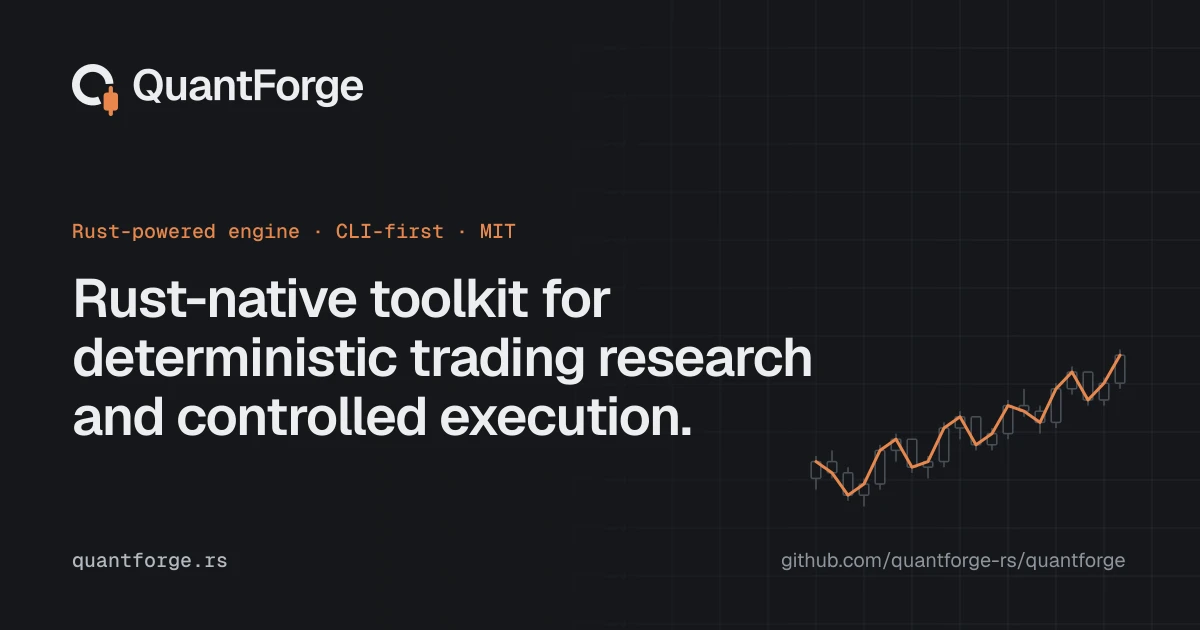
Every trading system starts with an idea.
Maybe you notice that Bitcoin tends to keep moving after breaking a recent high. Perhaps you believe a fast moving average crossing above a slower one signals the beginning of a trend.
But there is a big difference between having a trading idea and having a trading system.
A trading idea is a hypothesis. A trading system is a set of precise rules that can be tested, repeated, and eventually executed consistently.
So how do we get from one to the other?
Step 1: Turn the idea into exact rules
Consider a simple idea:
“Buy when the market starts trending upward.”
A computer cannot execute that. We first need measurable rules.
For example:
- Calculate a 20-period simple moving average (SMA).
- Calculate a 50-period SMA.
- Enter when the 20-period SMA crosses above the 50-period SMA.
- Exit when it crosses below.
- Evaluate signals only after the candle closes.
Now we have something reproducible. Given the same data and parameters, the strategy should make the same decision every time.
Step 2: Use reliable market data
Before testing the strategy, we need historical market data we can trust. Missing candles, duplicated records or incorrect timestamps can distort results. That's why the QuantForge workflow separates data synchronization and validation from strategy testing:
- Sync
- Validate
- Backtest
Testing against unreliable data can give us very precise answers to the wrong question.
Step 3: Backtest the strategy
A backtest simulates how those rules would have performed on historical data. But it needs to represent what would actually have been known at each point in time.
If a strategy accidentally uses future information, we introduce look-ahead bias. The results may look excellent while being impossible to reproduce in real trading.
And even a profitable backtest doesn't mean the strategy is ready.
We should also ask:
- What was the maximum drawdown?
- How many trades occurred?
- What happens after trading fees?
- Does performance depend on one unusually good period?
- Does the strategy behave similarly on other periods or markets?
The purpose of a backtest isn't simply to produce the highest historical return. It's to understand how a strategy behaves.
Step 4: Move beyond historical testing
Backtests happen in the past. Real markets arrive one candle at a time.
Before placing real orders, QuantForge provides another stage: dry-run trading.
The strategy can process current market data and generate decisions as it would in live trading, but without submitting real orders.
This gives us a useful progression:
- Trading Idea
- Rules
- Data
- Validation
- Backtest
- Dry Run
- Live
Algorithmic trading isn't simply about finding the right indicator. It's about building a repeatable process for turning an idea into something that can be tested and observed before real capital is involved.
And that leads to our next question:
How do we know whether a backtest actually tells us something useful?
Get the next part by email
Written by
Polona Stefanic
Join in
The roadmap is shaped by people running QuantForge and reporting where it fights them.
More articles
2 min read
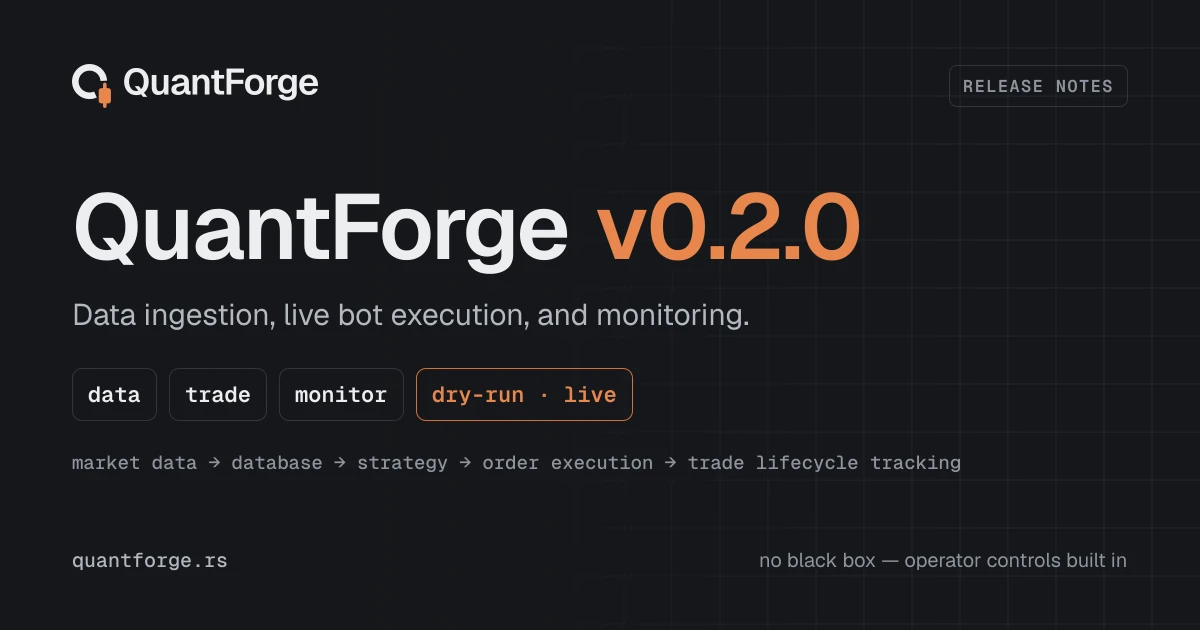
QuantForge v0.2.0
Live trading, data sync, and monitoring — data ingestion, live bot execution, and monitoring.
2 min read
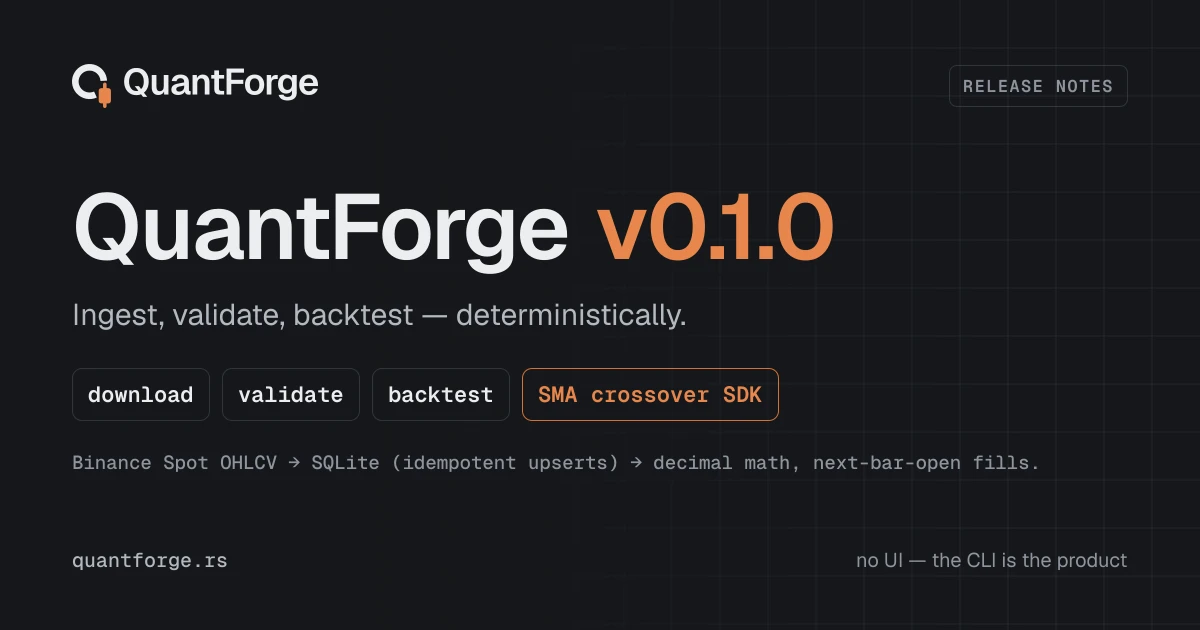
QuantForge v0.1.0
Binance Spot OHLCV ingestion, SQLite storage, explicit validation, and deterministic backtests.